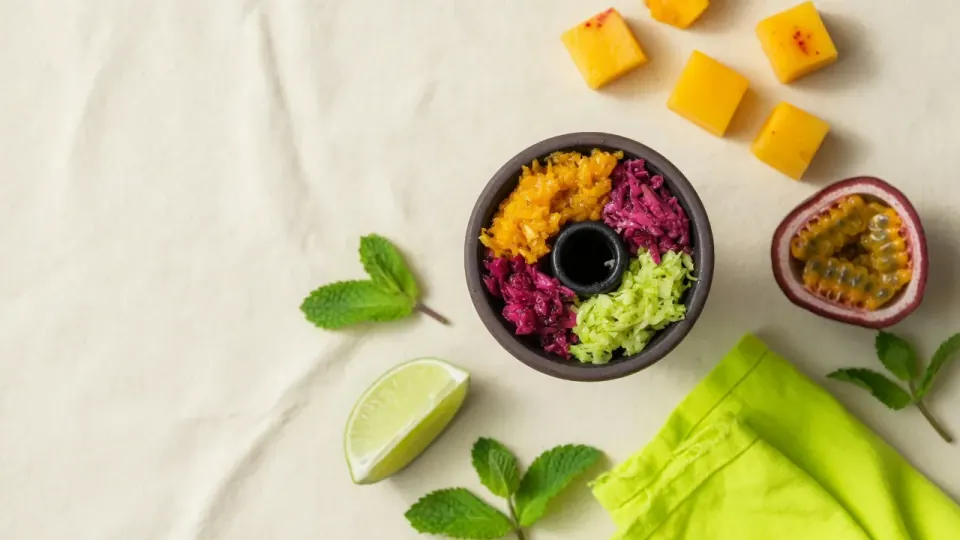
If rereading the full method guide feels early and pairing theory alone is not enough for a first bowl, take a ready recipe. Below are 12 beginner hookah mixes: a short formula, why it works, and when to leave it alone.
These are not the only correct bowls. They are clear starter schemes that are easier to repeat than building from zero. For method, read how to mix hookah tobacco; for pair logic, see flavor combinations.
How to read a recipe
Every recipe has a base and shares. The base is the flavor you should notice first. Shares are a visual guide by eye or tweezers, not pharmacy precision.
- 70/30 — the base leads, the second flavor adds character;
- 50/50 — a duet of similar strength;
- 80/20 or 90/10 — a loud accent (mint, cooling, spice) in a small share;
- 60/30/10 — base, support, and accent.
How to choose your first mix
Follow mood, not the most complex list:
- want juice — fruit recipes;
- want lightness — fresh recipes;
- want brightness without weight — berry recipes;
- want density — dessert recipes, without dumping mint on top.
If you only have a few flavors at home, start with two-component schemes. Add a third only when each role is clear.
Fruit mixes
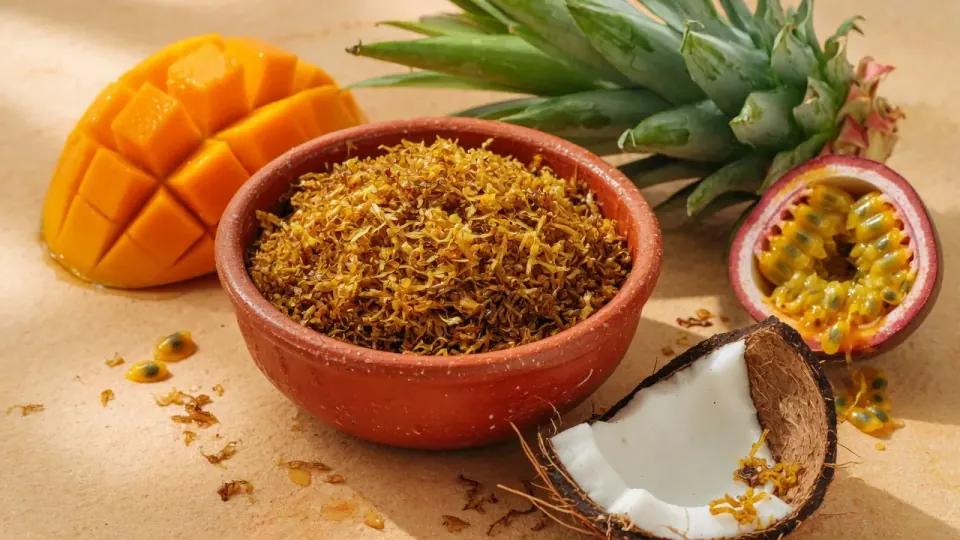
1. Mango + passion fruit — 70/30
Juicy tropical profile: mango holds sweetness, passion fruit adds acidity. If passion fruit is very loud, start at 75/25.
2. Pineapple + coconut — 70/30
Pineapple brings brightness, coconut softens and makes the bowl creamier. A good daytime mix without mint.
3. Peach + tea — 70/30
Soft fruit base with tea depth. If the tea tastes bitter, drop it to 20–25%.
4. Watermelon + melon — 50/50
A light duet of similar strength. If melon is too sweet, shift toward 60% watermelon and 40% melon.
Fresh mixes
5. Grape + mint — 80/20
Grape stays in front; mint only refreshes. With a very loud mint, start at 85/15 or 90/10.
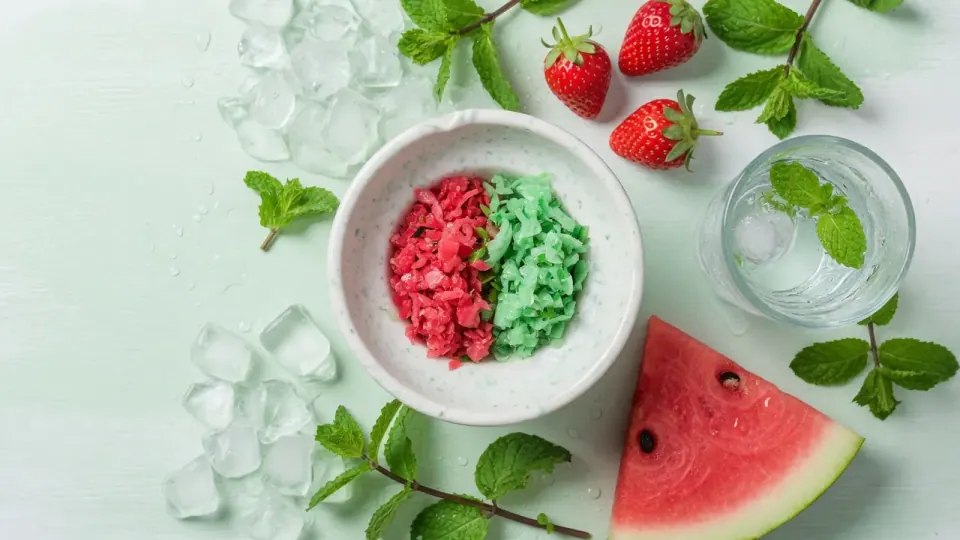
6. Watermelon + cooling — 85/15
When you want chill without a mint flavor. Cooling overpowers easily — do not raise it “just in case”.
7. Apple + mint + lemon — 70/20/10
Apple is the base, mint is freshness, lemon is a thin acid line. If lemon is sharp, leave 5–8%.
Berry mixes
8. Strawberry + banana — 50/50
A clear sweet duet. If banana feels heavy, use 60% strawberry and 40% banana.
9. Blueberry + lemon — 75/25
Berry base with citrus lift. Keep lemon in support: at 40% it already fights blueberry.
10. Raspberry + peach + mint — 60/30/10
Raspberry leads, peach softens, mint gives a short fresh finish. A clean step from two flavors to three.
Dessert mixes
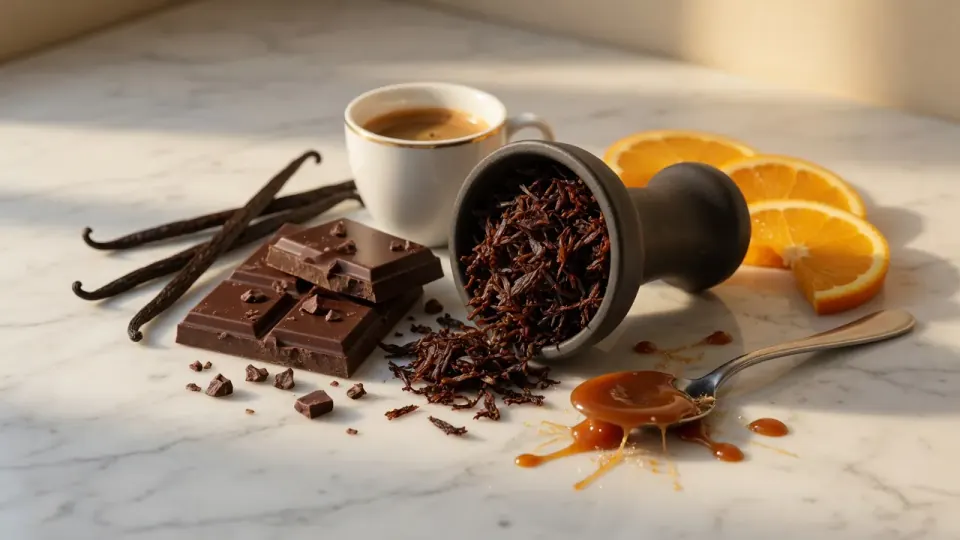
11. Chocolate + orange — 70/30
Dense dessert profile with citrus contrast. If chocolate is very sweet, orange can go to 35%.
12. Vanilla + strawberry + cream — 60/30/10
Soft dessert mix: vanilla holds the base, strawberry adds berry, cream a short dairy note. No fourth component.
Three rules so a recipe does not fall apart
- Do not fix a bowl with mint. If the fruit base is dull, change the second flavor or the share instead of pouring 30–40% mint.
- Do not mix five flavors at once. For beginners, two components are clearer. A third only with a clear job.
- Write down what you packed. Even “mango 70 / passion fruit 30, too much passion fruit” saves the next bowl. In Mixly you can store the good ones.
Frequently asked questions
Which recipe should a total beginner start with?
Mango + passion fruit 70/30 or grape + mint 80/20. Both read clearly and rarely turn muddy.
Can I swap brands in a recipe?
Yes, but intensity differs. If the new brand is louder, first reduce the accent or second flavor by 5–10%.
Do I need exact grams?
No. Relative shares and repeatability matter more. Grams help when you compare many lines often.
Why does the same recipe taste different?
Moisture, packing, heat, and the specific tobacco all matter. A recipe is a start, not a one-to-one guarantee.
Where to go after these 12 mixes?
Once the schemes feel familiar, return to flavor combinations and build your own pairs. Method and common mistakes are in the mixing guide.
This content is intended for adults only.