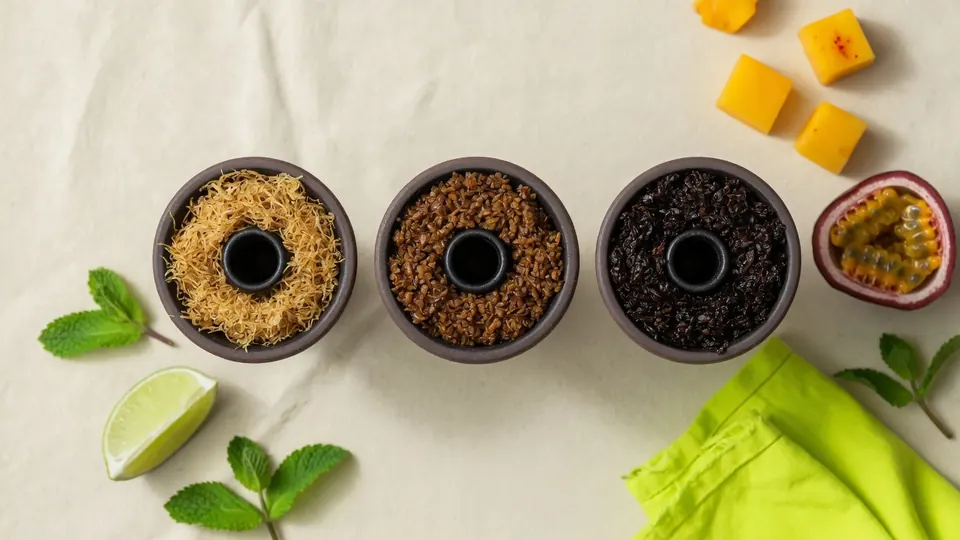
What people usually mean by strength
Strength is not only “how much nicotine”. In practice it means body, punch, richness, and how fast a session fatigues you. Two tins labeled light/medium can feel different because of leaf, syrup, heat, and pack.
For mixes the useful question is: will the bowl stay comfortable for 40–60 minutes, and will one component drown the rest?
Light, medium, strong — a practical scale
- Light: soft body, good for long sessions and bright aromatic accents;
- Medium: the versatile zone for most mixes and bases;
- Strong: denser body, fatigues faster; better as a deliberate choice than a default.
If a brand does not label strength, test solo: after 10 minutes, do you feel comfortable or already breathing “heavy”?
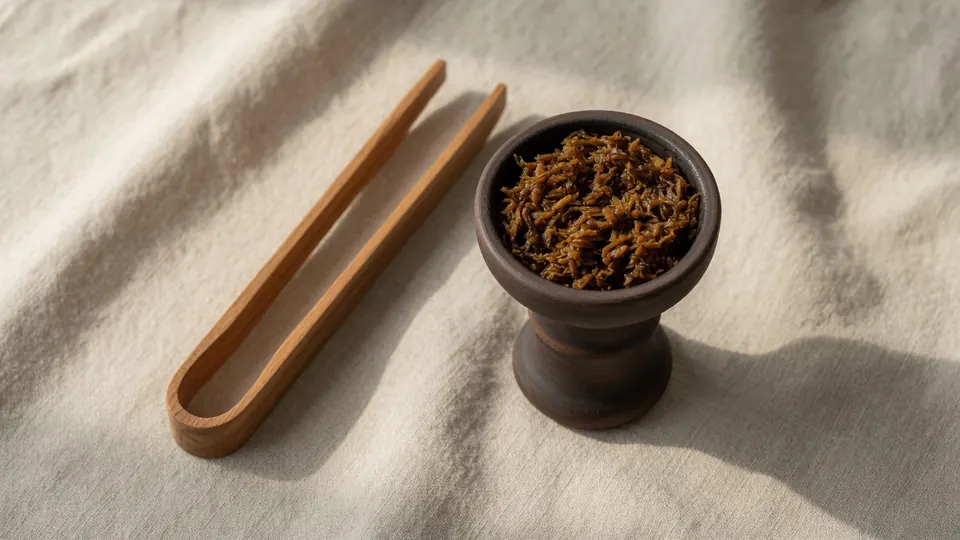
How strength affects a mix
Component strength does not stack perfectly linearly, but the rule is simple:
- light base + light accent — clean, sometimes thin;
- medium base + light accent — the most predictable balance;
- medium base + strong accent — the accent can steal the lead;
- two strong shares — risk of a heavy, short session.
When you pick a mix base, check strength and flavor role together.
How to match strength to the goal
- Daytime / long session: light–medium;
- Evening with friends, 1–2 bowls: medium;
- Short “punchy” mix: medium–strong, with careful shares;
- New to mixing: keep all components in the same strength band.
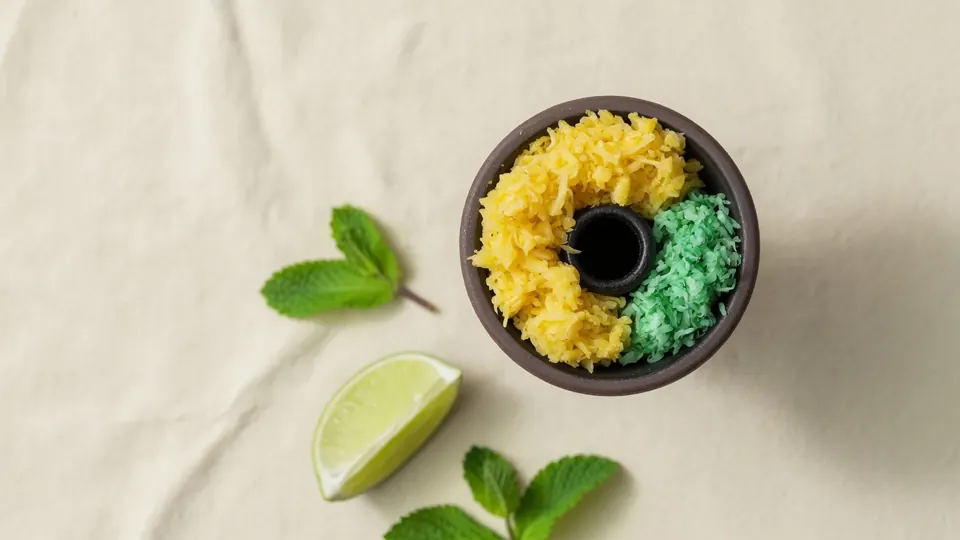
Heat and pack change perceived strength
Even medium tobacco feels “heavy” if you overheat the bowl or pack too tight. Conversely, a stronger leaf with a careful pack and controlled heat can stay manageable.
If a mix suddenly turns harsh, check heat as well as the recipe. Method and mistakes are covered in the mixing guide.
Quick checklist before you build a mix
- Base and accent in the same strength band, or the accent softer than the base;
- no two “punchy” components both above ~40%;
- stable heat, without early overheating;
- after 10 minutes the base still reads and breathing feels fine;
- the next experiment changes only one variable.
If the checklist is green, explore profiles and the share schemes in the beginner recipes.
Key takeaway
Treat strength as session comfort, not a contest. For most mixes, the medium zone is enough: medium base, accent no stronger than the base. Then refine taste with profiles and starter recipes.
Frequently Asked Questions
What if the mix feels too strong?
Lower the stronger component share, reduce heat, and next time pick a lighter base. Do not mask strength with an even louder aroma.
Can I mix light and strong in one bowl?
Yes, if the strong component is a small accent (5–15%). If both shares are large, the session often feels uneven.
Is strength more important than flavor?
No. Strength is the comfort frame; flavor is the content. Choose a comfortable band first, then profile and pairings.